The print media - 6
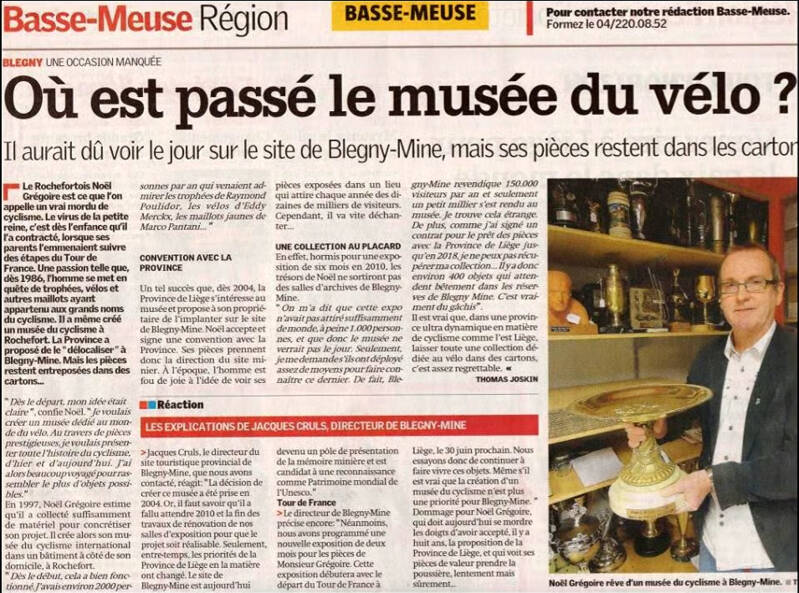
“The Cycling Museum is set to open in 2009 in Blegny” — Mine hopes followed by a terrible disappointment
This article announces the forthcoming creation of an International Cycling Museum on the Blegny-Mine site. After three years of red tape, the project finally seemed to be on track. Two rooms in the former sorting and washing plant were to be dedicated to the history of cycling and house the collections from the Lavaux-Sainte-Anne Cycling Museum.
Funding for the museum’s construction had indeed been granted and received. Supported by the Walloon Region and European funds, the project involved major refurbishment works. Bicycles, trophies, jerseys and memorabilia that had belonged to the greatest champions were to be displayed there. The stated aim was to create a genuine memorial dedicated to cycling heritage, capable of attracting large numbers of visitors from Belgium and abroad. Its opening was then scheduled for spring 2009.
On reading this article, it seemed that all the pieces were in place to secure the future of the collections. After their departure from Lavaux-Sainte-Anne and several years of uncertainty, they were finally going to find an exhibition space worthy of their significance. At that point, I truly believed in it. I hoped to see this great museum come to life, one that would have enabled us to preserve our heritage and share with the public the fruits of many years of research, encounters and passion.
The disappointment was all the more painful because, after the funding earmarked for the museum’s creation had been granted and received, the objectives for the Blegny-Mine site changed radically. I was then informed that the creation of the International Cycling Museum – despite having been promised and presented as imminent – was no longer part of the site’s plans. The spaces originally intended for the museum were now to host temporary exhibitions on a variety of themes.
The project for a permanent museum dedicated to the history of cycling was thus abandoned. The collections remained in storage and inaccessible to the public for several years. This change of direction put an end to any hope of seeing the grand museum that had been announced come to fruition at Blegny-Mine.
This article now stands as a record of an ambitious project that seemed on the verge of success but which will never see the light of day. It also serves as a reminder of a particularly painful period in the history of the collections: that of a dream underpinned by official commitments and funding, only to be replaced by an entirely different project.
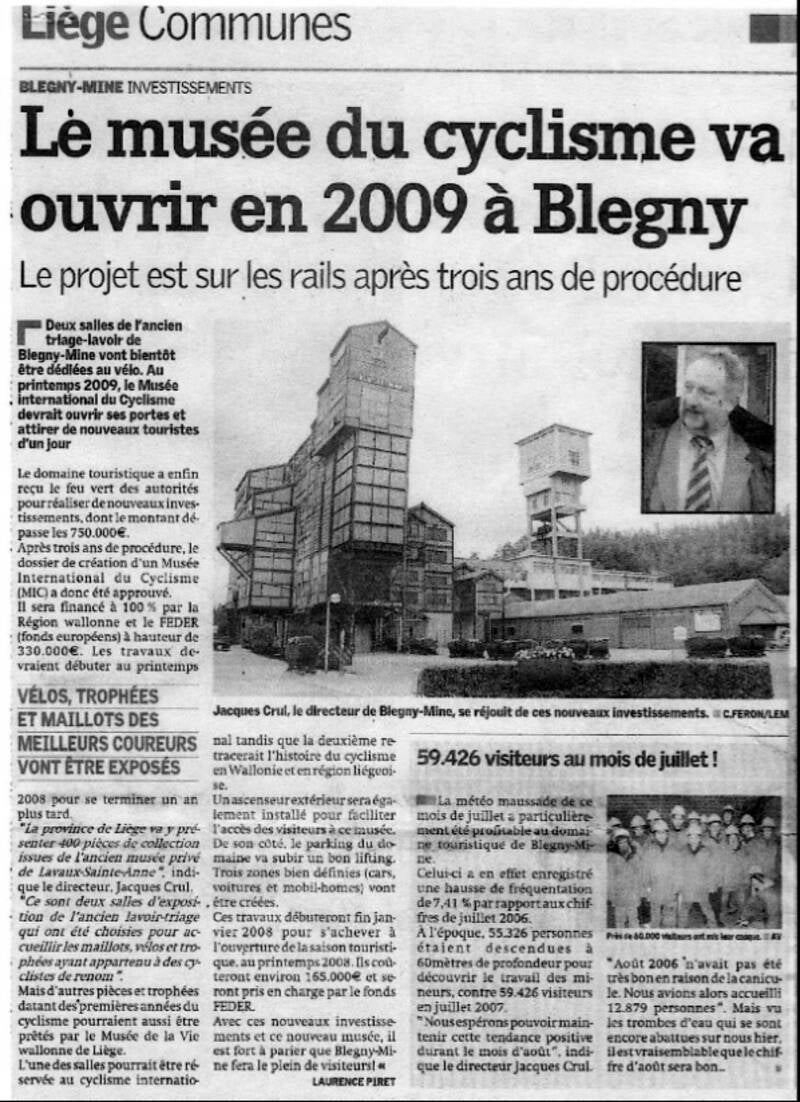
‘Where has the cycling museum gone?’ — A time of disillusionment
Under this particularly telling title, this article looks back at the scrapping of the International Cycling Museum, which was due to open in Blegny-Mine. Noël Grégoire’s collections, transferred from Lavaux-Sainte-Anne following an agreement with the Province of Liège, were still being kept in the site’s storerooms, out of public view.
For many years, Noël Grégoire had patiently collected trophies, bicycles, jerseys and countless memorabilia that had belonged to the greatest champions. The aim was clear: to create a museum dedicated to the history of cycling and to pass on this exceptional heritage to future generations. When the Blegny-Mine project was presented, it appeared to offer the collections a sustainable future as well as an exhibition space commensurate with their historical value.
However, despite the commitments made and the funding secured for the museum’s creation, the site’s priorities changed radically. The creation of a permanent cycling museum was no longer among Blegny-Mine’s objectives. Instead, it was decided to prioritise temporary exhibitions on a variety of themes. The cycling collections therefore remained locked away in storage, with the exception of a few occasional displays.
The article also features comments from the management of Blegny-Mine, who discuss the work carried out on the site, its shift towards promoting mining heritage and the change in its priorities. They confirm, however, that the permanent cycling museum – despite having been announced and eagerly anticipated for several years – was no longer considered a priority.
For me, this was the period of greatest disillusionment. I had entrusted my collections in the firm belief that the commitments would be honoured and that a proper museum would be established. To discover, after so many years of waiting, that the promised project had been definitively abandoned was extremely painful. I experienced this change of course as a profound breach of trust, a lack of respect and consideration for the work accomplished and the heritage entrusted to them.
This article thus bears witness to the collapse of a project in which I had sincerely believed. Beyond my personal disappointment, I regretted above all that a collection dedicated to the history of cycling remains locked away in boxes, when it could have been displayed to the public and played a full part in enhancing the cultural and sporting reputation of the province of Liège.