

The water bottles, caps, musettes and gloves - 4
ITEM N° 718
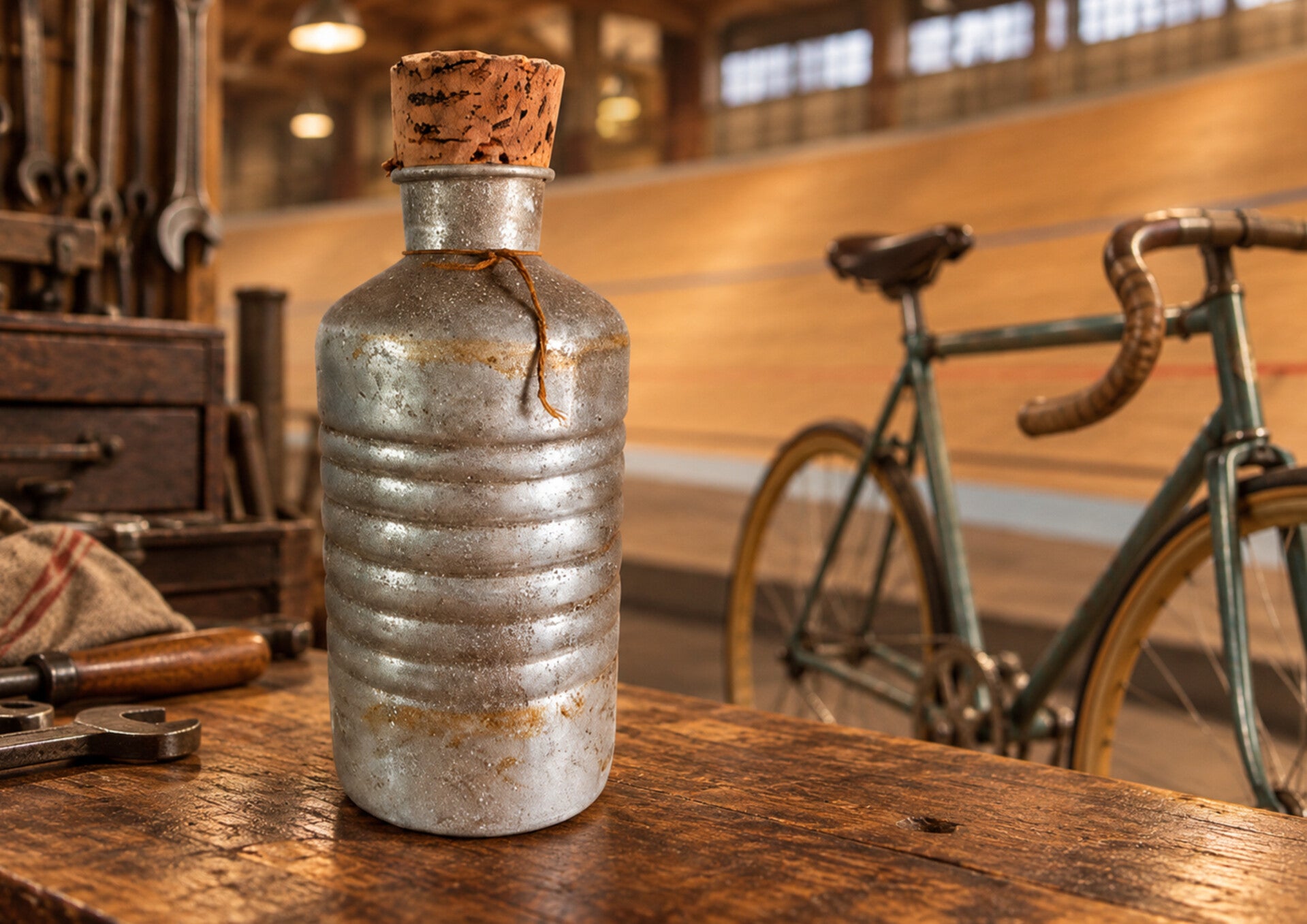
Metal water bottle (1930s–1950s)
This metal flask belongs to a generation of equipment used by professional cyclists before plastic containers became widespread. As it bears no logo, inscription or document of provenance, it cannot currently be linked with certainty to any particular team.
The object features a cylindrical body made of light metal, reinforced by several horizontal ribs. Its upper section forms a rounded shoulder, extending into a narrow neck. This is sealed by a cork stopper, secured to the bottle by a metal wire to prevent it from being lost during the race.
Traces of oxidation, scratches, dents and general wear and tear bear witness to prolonged use. Its robust construction was designed to withstand the vibrations, impacts and harsh conditions encountered on the roads of the time.
This type of water bottle was carried in a bottle cage attached to the bicycle frame. Heavier and less practical than modern models, it is a reminder of a period when riders’ refreshments relied on simple, durable and frequently reused equipment.
On display in the Virtual Cycling Museum – Noël GREGOIRE Collections, this water bottle is a tangible reminder of the equipment used in the peloton in the mid-20th century. Its patina and cork stopper illustrate the evolution of cycling accessories prior to the advent of modern soft-sided water bottles.
ITEM N° 719
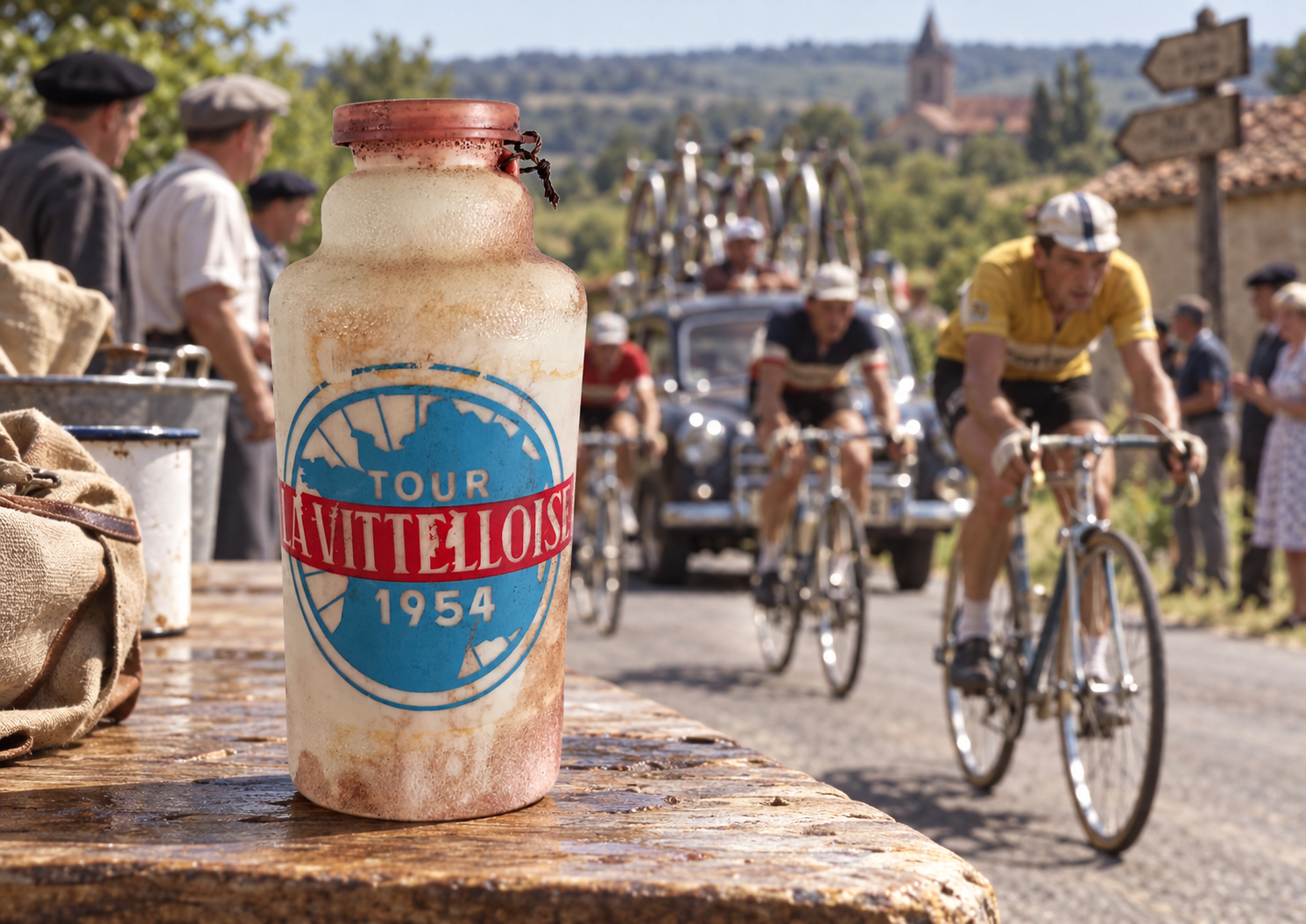
Water bottle used in the 1954 Tour de France
Official ‘La Vittelloise’ water bottle
This plastic water bottle was used during the 1954 Tour de France. It bears the blue and red emblem of La Vittelloise, a mineral water brand that supplied the race’s water bottles between 1950 and 1958. However, there are no markings to determine precisely which team or rider this particular bottle was issued to.
The year 1954 marked a significant change in the peloton’s equipment: the aluminium water bottles used until then were gradually replaced by plastic models. With a capacity of around half a litre, this one is sealed with a large cap secured to the bottle to prevent it from being lost during the race.
These water bottles were distributed at official refreshment points, carried in riders’ bags or kept in the team managers’ cars. Team members could also bring them back to the peloton to supply their leaders during the stage.
The dirt, scratches, wear and tear on the decoration, and general deterioration of the material are evidence of actual use. The ‘Tour – La Vittelloise – 1954’ emblem, still clearly visible, allows this item to be directly linked to the edition won by Louison Bobet.
Housed in the Virtual Cycling Museum – Noël Grégoire Collections, this water bottle is a valuable testament to how riders were supplied with refreshments and to the evolution of cycling accessories in the mid-1950s.
ITEM N° 720
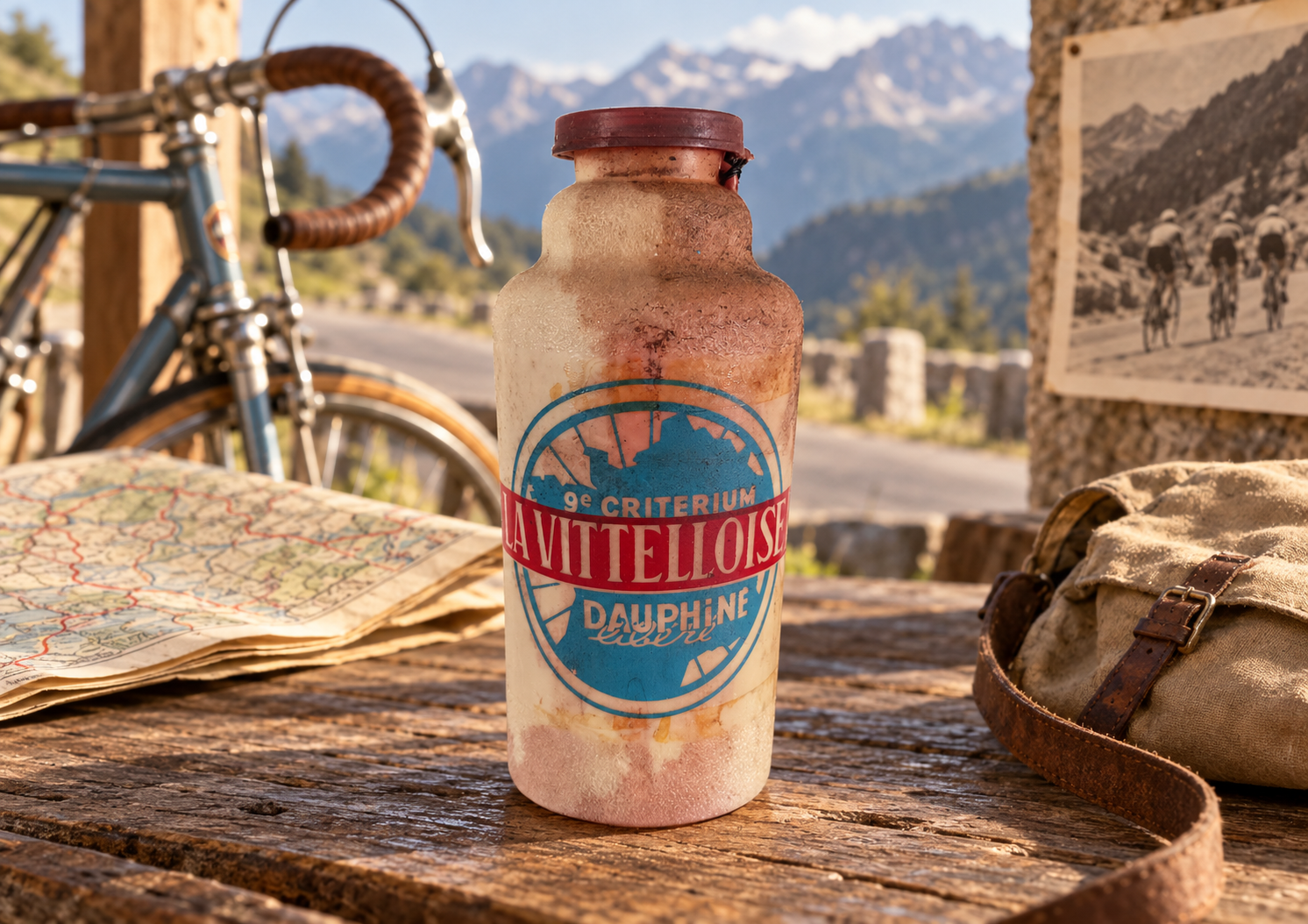
Water bottle used at the 9th Critérium du Dauphiné Libéré – 1955
Official “La Vittelloise” water bottle
This plastic water bottle was used during the 1955 Critérium du Dauphiné Libéré. It bears the blue and red emblem of La Vittelloise, a brand of mineral water which was then associated with providing refreshments for riders in several major cycling events.
The bottle has a cylindrical body topped by two rounded shoulders and a wide neck. Its red cap is secured by a small clip to prevent it from being lost during the race. The inscription ‘9th Critérium – La Vittelloise – Dauphiné Libéré’ allows this item to be precisely linked to the ninth edition of the race, held in 1955.
These water bottles were distributed to riders at refreshment stations, placed in their race bags or carried in the team cars. The fact that they were made of plastic, which is lighter than the metal used in earlier models, reflects the gradual evolution of cycling equipment in the mid-1950s.
The numerous marks of dirt, scratches, colour fading and general wear and tear on the material bear witness to prolonged use. These marks have been deliberately preserved: they form an essential part of the object’s history and authenticity.
Featured in the Virtual Cycling Museum – Noël Grégoire Collections, this water bottle is a rare physical artefact illustrating how riders were supplied with refreshments during the 1955 Dauphiné Libéré. It serves as a reminder of the racing conditions of the time and the importance of the suppliers who accompanied the peloton on a daily basis.
